Choosing the right datasets for data analysis projects directly impacts the accuracy, scalability, and business value of your analysis. The best datasets should match your project goals, contain clean and structured data, support real-world decision-making, and provide enough depth for meaningful insights.
Why Dataset Selection Matters in Data Analysis
Many data analysis projects fail because of poor dataset quality. Even advanced analytics tools cannot fix incomplete, outdated, or irrelevant data.
Strong datasets help you:
- Improve prediction accuracy
- Build reliable dashboards
- Identify market trends faster
- Train machine learning models effectively
- Generate actionable business insights
Whether you work in ecommerce, healthcare, finance, or retail, selecting the right data source is the foundation of successful analysis.
Key Factors to Consider When Choosing Datasets for Data Analysis Projects
1. Define the Project Objective First
Before downloading any dataset, define the exact business problem.
Ask questions like:
- Are you analyzing customer behavior?
- Do you need forecasting data?
- Are you training recommendation systems?
- Do you want competitor intelligence?
For example:
- Sales forecasting requires historical transactional data.
- Customer segmentation requires demographic and behavioral datasets.
- Market trend analysis requires competitor pricing datasets and consumer review data.
Your project objective determines the type of dataset you need.
Evaluate Dataset Quality and Structure
High-quality datasets for data analysis projects should include:
- Accurate records
- Consistent formatting
- Minimal missing values
- Clear labeling
- Updated information
Poor data quality leads to misleading conclusions and weak reporting.
Look for datasets that provide:
- CSV or JSON formats
- Metadata documentation
- Timestamped records
- Standardized categories
Clean datasets reduce preprocessing time and improve analysis speed.
Choose Between Public and Proprietary Data
Public Datasets for Analysis
Public datasets for analysis are useful for:
- Academic projects
- Proof-of-concept models
- Early-stage analytics experiments
- Student learning
Popular sources include:
- Government open data portals
- Kaggle
- Google Dataset Search
- UCI Machine Learning Repository
These datasets are usually free and easy to access.
However, public datasets may lack freshness, industry depth, or competitive insights.
Open Datasets for Research
Open datasets for research are commonly used in:
- Healthcare analytics
- Economic forecasting
- Social media analysis
- NLP model training
Researchers prefer open datasets because they support transparency and reproducibility.
When using open datasets, verify:
- Licensing terms
- Data collection methodology
- Update frequency
- Data completeness
Select Industry-Specific Datasets
Generic datasets are helpful for learning. Real business outcomes often require industry-focused data.
Datasets for Business Analytics
Datasets for business analytics typically include:
- Customer purchase behavior
- Revenue performance
- Product inventory
- Operational metrics
- CRM records
These datasets help businesses:
- Improve retention
- Optimize pricing
- Reduce operational costs
- Increase profitability
Business analytics datasets should contain both historical and real-time information whenever possible.
Marketing Datasets for Analytics
Marketing datasets for analytics help teams understand campaign performance and customer engagement.
Useful marketing datasets may include:
- Ad campaign metrics
- Search trends
- Conversion rates
- Email engagement
- Social media interactions
Marketing analysts use these datasets to:
- Measure ROI
- Improve targeting
- Analyze attribution
- Identify high-performing channels
Combining marketing datasets with customer behavior data creates stronger predictive models.
AI Training Datasets and Machine Learning Applications
AI training datasets are essential for machine learning and automation projects.
These datasets often support:
- Recommendation engines
- Chatbots
- Predictive analytics
- Image recognition
- Sentiment analysis
When selecting AI training datasets, prioritize:
- Large sample sizes
- Balanced data distribution
- Diverse data points
- Proper annotations
Biased or incomplete AI datasets can negatively affect model performance.
Product Sentiment Datasets for Consumer Insights
Product sentiment datasets help companies understand how customers feel about products and services.
These datasets often contain:
- Product reviews
- Ratings
- User comments
- Survey responses
Businesses analyze sentiment data to:
- Identify customer pain points
- Improve products
- Track brand reputation
- Detect emerging trends
Sentiment analysis is widely used in ecommerce, SaaS, and beauty industries.
For example, beauty brands use review sentiment to identify common complaints about skincare ingredients, packaging, or pricing.
Competitor Pricing Datasets for Market Intelligence
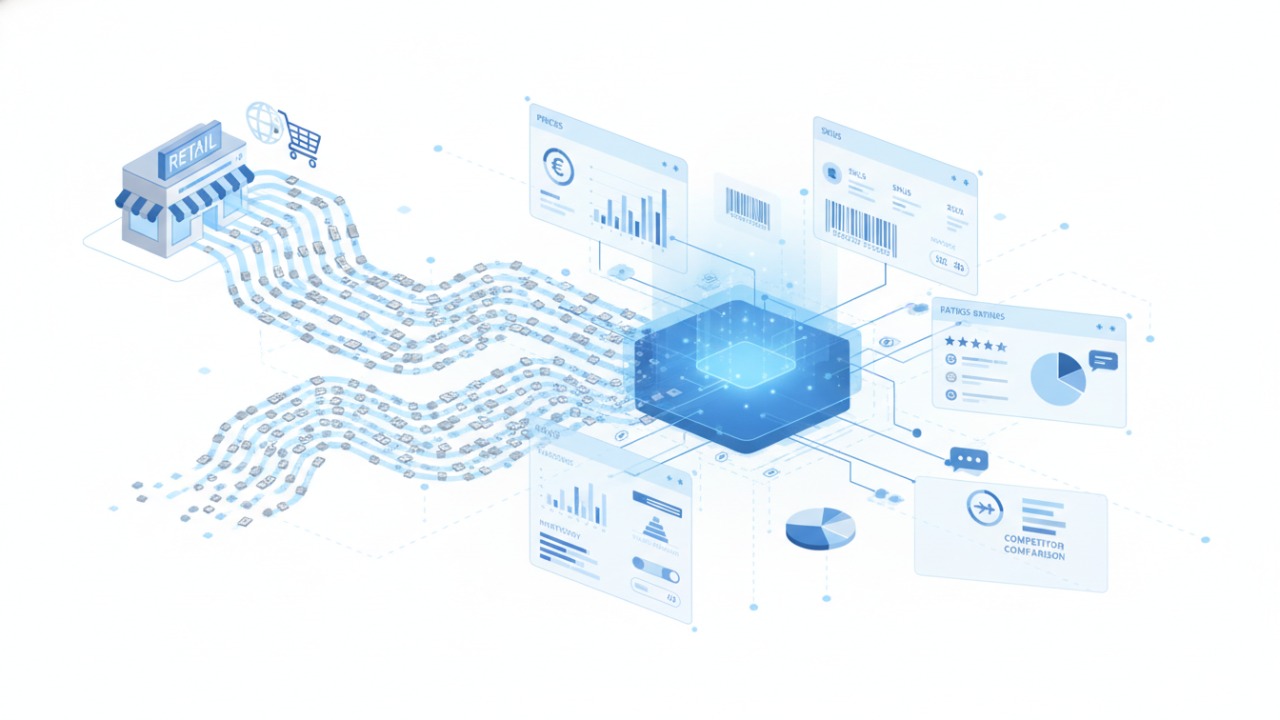
Competitor pricing datasets are valuable for ecommerce and retail analytics.
These datasets help companies monitor:
- Product pricing changes
- Discount trends
- Competitor positioning
- Dynamic pricing patterns
Pricing intelligence supports:
- Better profit margins
- Faster strategic decisions
- Competitive benchmarking
- Promotional planning
Retailers that track competitor pricing regularly can respond faster to market shifts.
Track Your Competitors’ Product Pages — Effortlessly here
Beauty Trend Datasets and Consumer Behavior Analysis
Beauty trend datasets are becoming increasingly important in ecommerce analytics.
These datasets include:
- Product review trends
- Ingredient popularity
- Consumer preferences
- Brand performance
- Beauty search behavior
Beauty companies use trend datasets to:
- Predict emerging skincare trends
- Launch targeted products
- Improve inventory planning
- Personalize customer experiences
Platforms like BeautyFeeds.io provide structured beauty datasets that support market research and ecommerce analytics.
Beauty trend datasets are especially useful for:
- AI-powered product recommendations
- Consumer sentiment analysis
- Competitive brand tracking
- Trend forecasting
Questions to Ask Before Finalizing a Dataset
Before using any dataset, ask:
- Is the data recent?
- Does it align with the project objective?
- Is the dataset scalable?
- Are there licensing restrictions?
- Does the data require extensive cleaning?
- Can it integrate with BI tools or analytics platforms?
A dataset may look large but still fail to provide actionable insights.
Final Thoughts
The success of datasets for data analysis projects depends on relevance, quality, structure, and business alignment. Public datasets for analysis are useful for experimentation, while industry-focused datasets deliver stronger commercial insights.
Whether you need datasets for business analytics, AI training datasets, product sentiment datasets, competitor pricing datasets, or beauty trend datasets, selecting the right source improves decision-making and analytical accuracy.
Businesses that invest in high-quality datasets gain a significant advantage in forecasting, customer understanding, and market intelligence.
Looking for a dataset?
Browse hundreds of pre-built datasets from CrawlFeeds — ecommerce, reviews, fashion, news, and more. Free samples on every dataset.
Browse datasets Custom data request