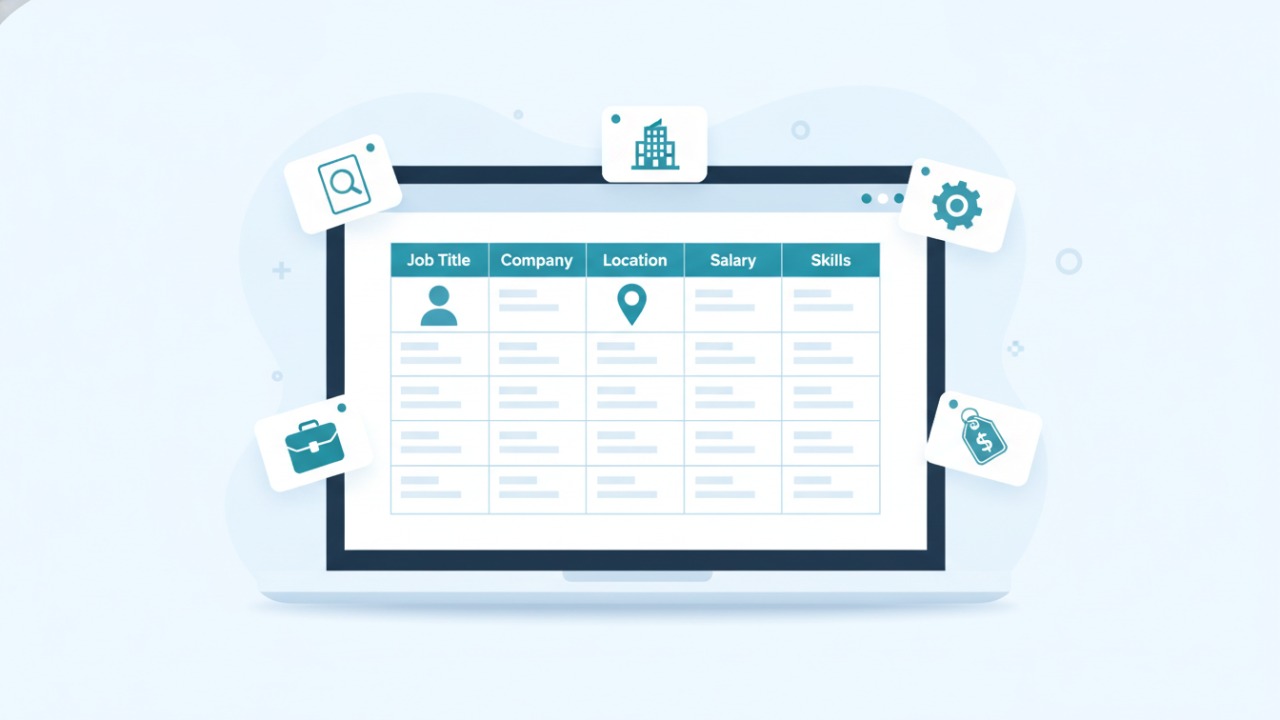
European e-commerce data collection requires more than extracting product pages. Businesses need structured, comparable data across countries, currencies, languages, retailers and marketplaces. This data supports competitor analysis, price monitoring, market research, product intelligence, inventory analysis and trend identification. A consistent collection process makes European markets easier to compare and analyze.
What Is E-Commerce Data Collection?
E-commerce data collection is the process of extracting product information from online retailers, marketplaces and brand websites and converting it into structured data.
Common e-commerce product data includes:
- Product name and URL
- Price and currency
- Brand and category
- SKU or product ID
- Product description
- Product images
- Availability
- Ratings and reviews, where available
The exact fields depend on the business objective. Crawl Feeds' e-commerce catalogue includes common fields such as product name, URL, price, currency, description, category, brand, SKU, image URLs and availability.
Why European E-Commerce Data Is Different
The main challenge with e-commerce data collection in Europe is that Europe is not one uniform online market. Businesses may need to collect and compare data from multiple countries, retailers and regional storefronts.
Multiple currencies
European markets can use EUR, GBP, CHF, SEK, DKK and PLN, among others. Currency normalization is important when comparing product pricing across countries. Without it, price comparisons can produce misleading results.
Multiple languages
Product names, descriptions, categories and attributes can change between markets. A structured European product data model should preserve the original information while applying consistent category and attribute standards.
Regional catalogues
The same retailer can offer different products, prices, promotions, sizes, colours and availability depending on the country. For example, Crawl Feeds provides regional Zara product data covering markets such as the UK and France, with fields including pricing, variants and availability.
This makes multi-country e-commerce data valuable for businesses operating across borders.
What E-Commerce Data Should You Collect?
The right e-commerce data fields depend on the intended use.
|
Data type |
Business use |
|
Product information |
Catalogue analysis |
|
Pricing |
Price monitoring |
|
Availability |
Inventory intelligence |
|
Categories |
Market segmentation |
|
Brand |
Competitive analysis |
|
Images |
Catalogue enrichment |
|
Ratings and reviews |
Customer research |
|
SKU/product IDs |
Product matching |
|
Currency |
Cross-market comparison |
For example, a price-monitoring project may prioritize product ID, price, currency and availability. A catalogue analysis project may require descriptions, categories, variants and images.
Crawl Feeds provides structured datasets in formats including CSV and JSON, with samples available for evaluating dataset content.
How to Collect E-Commerce Data Across European Markets
A reliable e-commerce data collection Europe workflow usually follows five steps.
1. Define the data requirements
Start by identifying:
- Target websites and countries
- Product categories
- Required fields
- Collection frequency
- Output format
This prevents unnecessary data collection and keeps the final dataset aligned with the business objective.
2. Select your data sources
Choose relevant European retailers, marketplaces and brand websites. Crawl Feeds' catalogue includes sources such as Amazon UK, eBay UK, Argos, John Lewis, Currys and Otto.
3. Extract the data
Businesses can either build their own extraction infrastructure or use an e-commerce data provider.
Internal extraction offers greater control but requires ongoing development and maintenance. A provider can handle extraction and deliver structured e-commerce product data based on defined requirements.
4. Normalize the data
Standardize currencies, categories, brands, product names, attributes and country identifiers. This is essential for reliable cross-border comparisons.
5. Validate and deliver
Check for missing fields, duplicate products, incorrect values, outdated records and schema inconsistencies. Depending on the workflow, data can then be delivered through CSV, JSON, Excel, API or another required format. Crawl Feeds currently supports multiple delivery formats, including CSV, JSON, Excel and API access.
European E-Commerce Data Use Cases
Well-structured European e-commerce data can support several business decisions.
Competitor price monitoring
Track competitor prices across retailers and countries to identify price differences, promotions and market movements.
Market research
Compare products, brands, categories, assortment and pricing to understand individual European markets.
Product intelligence
Monitor catalogue changes, product availability, variants and other product attributes.
Price comparison
Use normalized pricing data to build comparison tools, dashboards and competitive pricing models.
Retail analytics
Combine product, pricing and availability data to identify trends and support inventory and assortment decisions.
Crawl Feeds identifies applications including competitive analysis, price monitoring, trend identification, inventory management, recommendation engines and market segmentation.
Challenges of Cross-Border E-Commerce Data Collection
Large-scale e-commerce data extraction becomes more difficult when multiple markets are involved. Common challenges include:
- Changing website structures
- Country-specific domains
- Dynamic product content
- Duplicate products
- Currency differences
- Language variations
- Data freshness
- Large-scale processing
- Schema normalization
Data quality is particularly important. A dataset with missing prices, duplicated SKUs or inconsistent categories can undermine otherwise useful retail analytics.
Businesses should also ensure that their data collection practices comply with applicable laws, website terms and data-use requirements.
Pre-Built Datasets vs Custom E-Commerce Data Collection
The right approach depends on the project.
|
Pre-built datasets |
Custom collection |
|
Faster access |
Built for specific requirements |
|
Existing schema |
Custom fields |
|
Good for common use cases |
Better for niche sources |
|
Lower setup effort |
Greater flexibility |
Crawl Feeds offers both pre-crawled e-commerce datasets and custom extraction. Its platform supports ready-made datasets as well as custom requests for specific websites and data requirements.
How to Choose an E-Commerce Data Provider
Before selecting an e-commerce data provider, evaluate:
- European market coverage
- Source and retailer coverage
- Available data fields
- Data freshness
- Data quality and validation
- CSV, JSON or API delivery
- Custom extraction capabilities
- Sample data availability
- Scalability
- Customer support
The provider should match both your target markets and your intended use of the data.
Conclusion
Effective e-commerce data collection Europe is about creating consistent, structured and comparable information across fragmented markets. Businesses can use European retail data for competitor price monitoring, market research, product intelligence, pricing analysis and inventory decisions.
If you need ready-to-use European e-commerce datasets or custom data extracted from specific retailers, Crawl Feeds provides structured datasets and custom collection options in formats such as CSV and JSON.
Looking for a dataset?
Browse hundreds of pre-built datasets from CrawlFeeds — ecommerce, reviews, fashion, news, and more. Free samples on every dataset.
Browse datasets Custom data request